Identify the supported measurement route
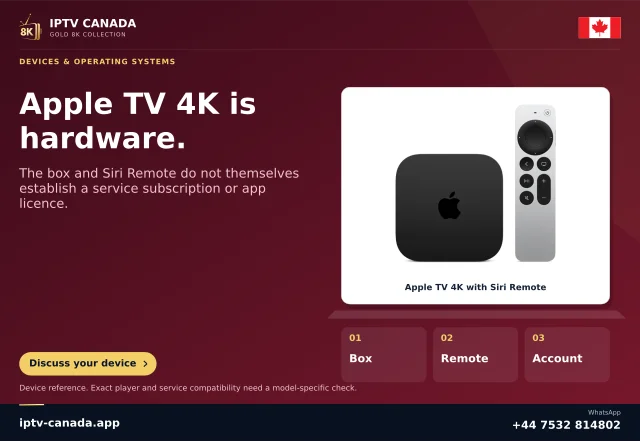
Apple’s current guide specifies an iPhone with Face ID running iOS 14.5 or later for Colour Balance. Confirm the actual phone and box before starting. A different phone with a camera is not evidence of support, and a programme logo is not a colour reference.
Record the television input and Apple TV output arrangement used for the comparison. If the television’s own app looks different, that is a separate source path; an adjustment made through Apple TV should not be described as a verified calibration of all the panel’s other inputs and applications.
Select the correct calibration tool
Open Apple TV Settings, then Video and Audio, and navigate to Calibration. Select Colour Balance and follow the on-screen measurement instructions with the supported phone. Finish the prompted procedure before comparing the result rather than changing television picture controls during the measurement.
If the problem is a cropped edge or a stretched picture, Apple separately provides Zoom and Overscan reference imagery. For manual television colour, tint and picture adjustments, it separately provides Colour Bars. These are different tasks. A completed Colour Balance run does not establish that the framing is correct or that manual changes made later preserve the measured condition.
Make a controlled before-and-after comparison
Use the same source, passage and output route while comparing the offered result. Keep other picture processing and room conditions as consistent as practical. Record your preference and any residual issue separately; liking one result is not an instrumented proof of professional reference accuracy.
The adjustment also does not identify the programme’s original colour transfer, dynamic range or resolution. Those require source or output evidence of their own. A more pleasing white balance cannot certify that the delivered programme is 4K or that missing highlights existed in the source.
Keep the result narrower than a whole-display certification
A useful note contains phone model/software, box/software, input and the tool actually completed. If a control is unavailable, retain its displayed explanation instead of assuming every unsupported condition has the same cause. The inspected source does not establish every Dolby Vision-specific exception, so none is invented here.
No display, phone or colour meter was tested for this article. The procedure follows Apple’s documented tool boundaries and leaves professional calibration, other television sources and programme-format verification as separate tasks.
Sources and scope
Scope notes distinguish published documentation, supplied information and editorial methods. They do not report a hands-on service test.
- Apple: video calibration tools — Officialindexedfulltooldefinitions inspected:FaceID/iOS14.5minimum,ColourBalance/ZoomOverscan/ColourBars. Directopen429; no physicalmeasurement.
- Apple: ColourBalance introduction — Officialindexed tvOS14.5section saysAppleTVadjusts afteriPhonemeasurement; notglobalpanel orprofessionalcertification.