Keep minutes in the source record
Write the original time exactly, including minutes, date and named zone. A source showing 19:30 should not become “around seven” in an order or viewing note. The distinction matters when coverage begins before a scheduled event.
A time shown on a programme image may belong to another region or edition. Confirm it against a current organiser or broadcaster record before converting it.
Use a named-location conversion
A current calendar or time-zone tool should use the actual place and date. Do not assume an offset remains unchanged throughout the year, and do not apply another province’s rule to a whole country.
If a player accepts only a numeric guide offset, establish whether that value is a temporary correction or a deliberate source-zone setting. Keep the original value so it can be reviewed after system or guide updates.
Check date rollover
Adding or subtracting an offset can move a programme into the previous or next calendar day. Include the converted date alongside the time. This is especially useful for overnight sport and international events.
A replay window can also be tied to a source timestamp. If the player requests the wrong interval, a plausible title may open the wrong segment. Preserve both the guide entry and actual picture when reporting the problem.
Avoid one national clock
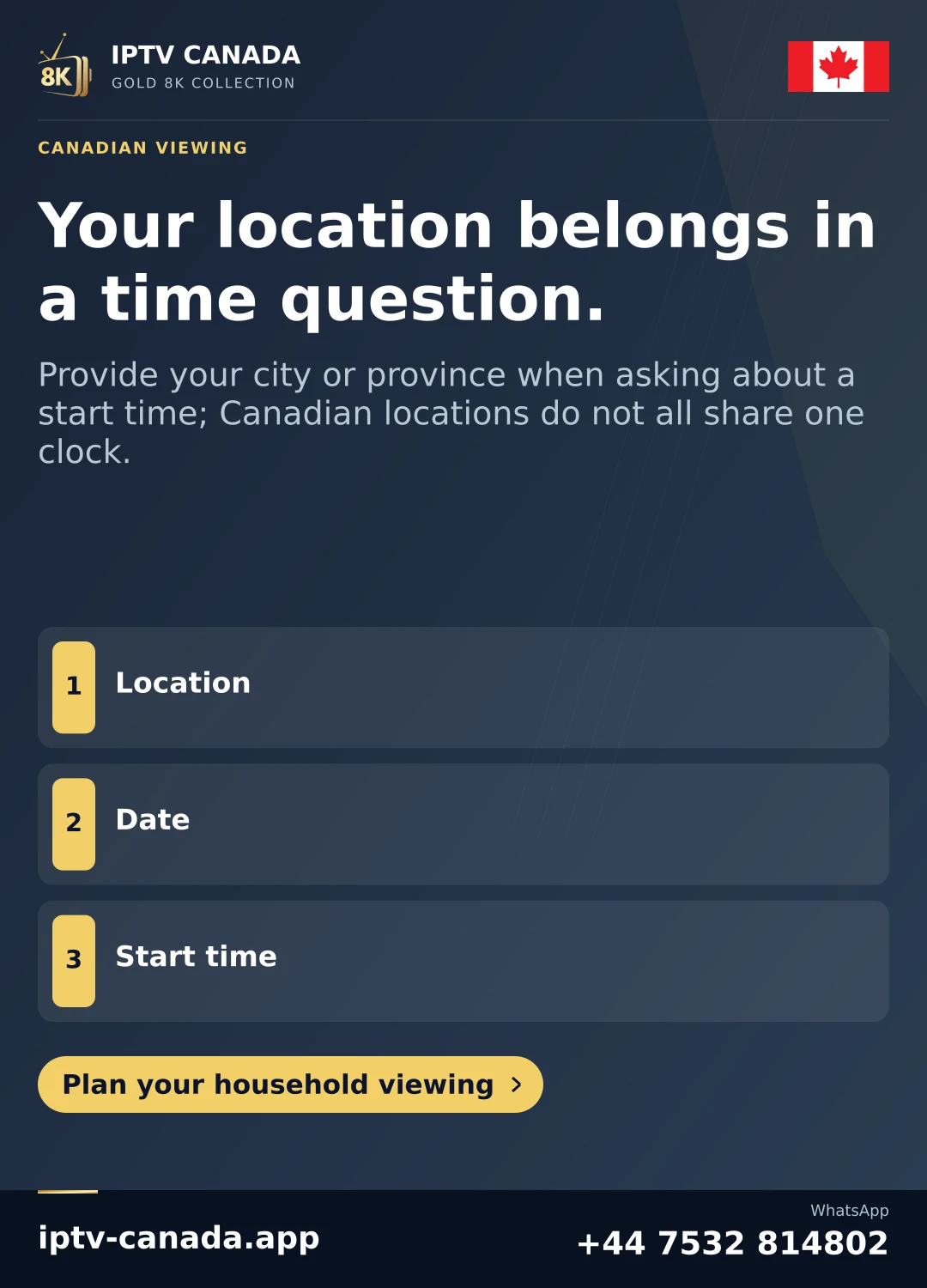
Canadian viewing guidance should identify the reader’s location rather than refer to “Canada time.” The national time-zone overview is a starting reference, while current local authorities establish regional rules.
This article deliberately publishes no fixture or universal city-to-city gap. Its purpose is to keep a verified event time intact through conversion, including minutes and the calendar date.
Related questions
Can a thirty-minute error come from rounding?
Yes. Rounding a real offset or source time can create that error; verify the actual location and date.
Should I include the date after conversion?
Yes, particularly when the event may cross midnight in either location.
Sources and scope
Scope notes distinguish published documentation, supplied information and editorial methods. They do not report a hands-on service test.
- National Research Council Canada: time zones and daylight saving time — National overview and distinct regional time-zone rules. Guide-offset diagnostic method is editorial reasoning, not a tested player control.
- NRC Canada time-zone maps — Official map indexed labels include NST UTC−3:30 and NDT UTC−2:30; no fixture or universal city-to-city gap is asserted.