Use the character guide to settle the role
HBO's official character descriptions name D’Arcy's Princess Rhaenyra and Alcock's young Princess Rhaenyra. The same production material identifies Olivia Cooke as Alicent Hightower and Emily Carey as young Alicent. These are documented role distinctions inside one series, not a reason to assign each performer a separate programme version.
Save the character name, age-stage label where relevant and the episode being discussed. A clip identified only by an actor can omit the role context, while a broad family surname can refer to several people. Use the official credited role instead of inferring a family relationship from appearance.
The book source is another level of reference
HBO identifies the series as based on George R. R. Martin's Fire & Blood and places it about two centuries before Game of Thrones. That source credit does not turn a TVseason number into a book volume or prove that every chapter has a matching episode. Keep the novel or history-volume reference separate from the screen episode when comparing an event.
If a reading discussion needs an exact passage, retain the book edition and page or section independently. If a television discussion needs a scene, retain season, episode and timestamp. Those two references can describe related material without supporting an automatic page-to-minute conversion.
Keep family-tree research apart from a spoiler-light watchlist
A complete character genealogy can reveal relationships or outcomes beyond an opening episode's premise. Decide whether the task is identifying a current scene or studying the wider family history. For the first task, a narrowly scoped cast credit may be enough; a full franchise timeline can disclose much more than the viewer asked for.
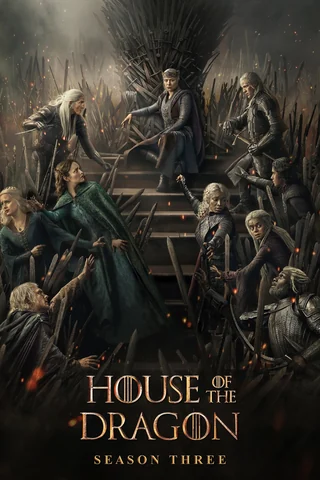
The collection image visibly identifies Season Three. It is not a season 1 cast photograph, and its caption preserves that scope. Official character documentation supplies the early-role facts here. No episodes were watched or family-tree interpretation tested for this article. Verify the specific episode and production rather than treating an actor change, a repeated surname or a later-season poster as sufficient proof of an incorrect source.
Sources and scope
Scope notes distinguish published documentation, supplied information and editorial methods. They do not report a hands-on service test.
- HBO: HouseoftheDragon season1 characterdescriptions — Official indexed charactercredits identify DArcy/Alcock as Rhaenyra/youngRhaenyra; productionmaterial also Cooke/Carey.
- HBO2022 production castreference — Official indexed castroles corroborate Alicent/youngAlicent; no currentrole-roster claim.
- HBO: season3 and sourcepremise — Official indexed description namesFireAndBlood and broad200yearprequelposition; no episodewatched.