Keep the source comparison controlled
Use the same authorised item and edition when comparing applications. Note the device, Android version, app versions and output screen. A different title or edition can have different grading and metadata before rendering begins.
Record the visible symptom concretely: clipped bright detail, banding or a changed colour appearance. Do not expand one difference into a claim that the whole device cannot play HDR.
Read the developer-level distinction
Android's current HDR guidance distinguishes SurfaceView and TextureView paths. It describes limited TextureView HDR behaviour on Android13 and later, including conversion with possible detail loss, and recommends appropriate SurfaceView use.
This is application developer guidance. It is not a consumer setting that appears universally in every player, nor a hidden installation step that turns a non-HDR display into an HDR display.
Include the complete capability chain
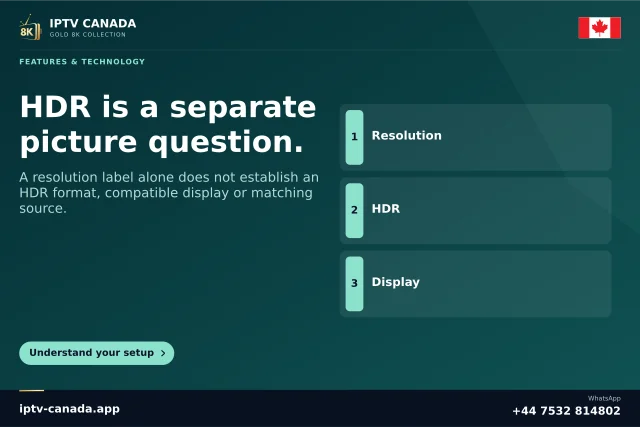
The source, decoder, rendering path and display all require relevant support. Android's Media3 surface documentation also discusses timing, secure output and TV UI-resolution considerations. Those are implementation qualifications, not blanket certification of an app using Android.
A hardware marketing label or an operating-system version alone does not identify the surface a particular app uses.
Give the app developer the right evidence
Report the controlled difference and ask which rendering path is supported for that configuration. If the app exposes a documented surface option, record the original value and compare the same passage. Do not invent an option from the API terminology.
Keep television processing and output mode consistent. Otherwise a display-preset change can be mistaken for an application rendering change.
Keep the result conditional
A difference between two apps is evidence about those versions and that source. It does not establish the cause without implementation or diagnostic evidence.
No application source, HDR signal or physical device was inspected here. This guide explains the official rendering boundary and a proposed support workflow, not an IPTV Canada format guarantee or a promise that one setting repairs all HDR pictures.
Interface resolution is another layer
The Media3 surface guidance notes that some Android TV interfaces are drawn below the display's full resolution. A menu's apparent resolution is therefore not enough to identify the video surface output. Keep source dimensions, interface rendering and received display mode separate. A crisp or soft app tile is not a direct measurement of the programme's decoded resolution.
Sources and scope
Scope notes distinguish published documentation, supplied information and editorial methods. They do not report a hands-on service test.
- Android HDR playback — Official current developer excerpt: HDR display/decoder and surface requirements; not a user-installable HDR upgrade.
- Android Media3 surface types — Official current developer excerpt: SurfaceView/TextureView tradeoffs and platform qualifications; no application implementation inspected.