Confirm the documented equipment
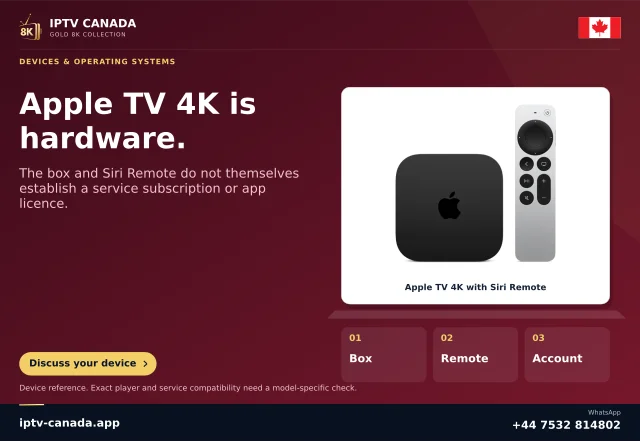
Apple's current instructions specify Apple TV4K second generation or later, HomePod or HomePod mini speakers and a television supporting ARC or eARC. This does not apply to every Apple TV or arbitrary wireless speaker.
Record the actual models and TV return-channel port. A standard HDMI input and a designated audio-return port can have different roles.
Establish the default speaker arrangement
Follow Apple's supported default-speaker setup for the HomePod room. Its guide identifies room association as a relevant prerequisite. A temporary audio selection should not be assumed to establish the same arrangement.
Confirm normal Apple TV sound first. That baseline tests one source route, not television return audio yet.
Inspect the return-audio control
The documented Apple TV route is Settings, Video and Audio, Audio Output, then the Audio Return Channel area and Play Television Audio. Read the resulting ARC or eARC state.
The TV may also need its supported ARC/eARC or CEC controls enabled. Use its exact manual rather than a generic menu name from another brand.
Test a separate television source
Use a permitted TV source through the documented arrangement and observe whether sound reaches the intended HomePod speakers. Keep TV input, volume and mute state clear.
If Apple TV content works but television-source sound does not, preserve that difference. It narrows the investigation to the return path without identifying one cause prematurely.
Keep the result conditional
Report the Apple TV generation, speakers, TV, selected port, default output and return-audio state. A completed setup screen is an earlier result than audible sound through each intended source.
No HomePod, TV or Apple TV was physically tested here. The article follows Apple's exact feature scope and does not promise every source codec, every room arrangement or IPTV Canada compatibility.
Keep room and source identities in the result
If several HomePod rooms exist, verify which room is selected as the default rather than assuming the nearest speaker is the intended output. Then record the actual television source used for the return-audio test. A volume adjustment heard in another room can otherwise look like silence in the viewing room. A successful Apple TV reference, default-room choice and returned TV programme are three useful observations. Keep all three with the model list instead of reporting only that the speakers are paired.
Sources and scope
Scope notes distinguish published documentation, supplied information and editorial methods. They do not report a hands-on service test.
- Apple TV HDMI ARC and eARC — Official support page inspected: Apple TV4K second generation or later, HomePod/HomePod mini and supported TV requirements, with default-output and return-audio controls.
- Apple TV remote equipment control — Official current guide excerpt: Auto/CEC/IR and learned volume-control routes with equipment qualifications.