Draw the actual audio route before calibrating
Apple describes an Apple TV 4K connected by HDMI to a television or receiver, with a wireless speaker also playing. Latency can make the two outputs sound like an echo. Write down which speakers are sounding and which equipment receives the HDMI signal.
If only one output is active, or the problem is video arriving late in one app, retain that observation instead of assuming the documented dual-speaker case applies. The calibration should have a specific target: timing between the wired reference and the wireless output, not a general promise to repair every delay in a service.
Follow the measurement sequence
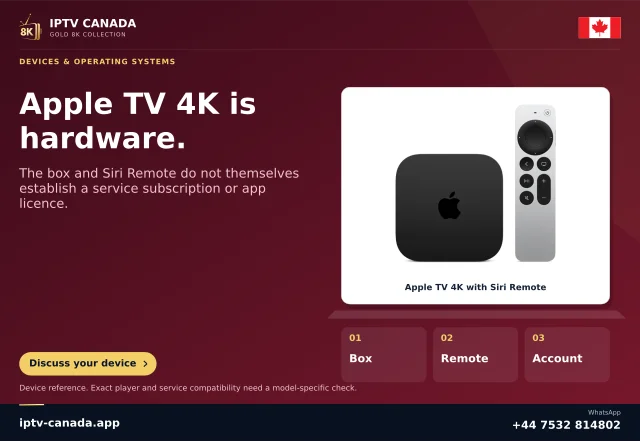
Open Settings on Apple TV 4K, then Video and Audio. Under Calibration, select Wireless Audio Sync and follow the on-screen iPhone prompts. Apple says to hold the phone close to the TV or receiver speakers. The box plays measurement tones through those wired speakers and uses the measured latency to match wireless output.
Use the wired speakers the documentation identifies, rather than holding the phone beside the wireless speaker and assuming the measurement is interchangeable. If the expected prompt or tones do not occur, record that stage before changing several audio settings. The expected procedure is a measurement followed by comparison, not an arbitrary delay value copied from another household.
Compare the result on the same route
Return to a familiar reference passage with the intended speakers selected. Listen for the relationship between the two outputs and observe speech separately if that matters. Keep source, player and receiver processing unchanged for this comparison; otherwise a different result cannot be assigned confidently to the calibration.
If echo remains, confirm that another speaker path was not added and that the equipment arrangement matches the one measured. Report the route and observation rather than repeatedly rerunning calibration against a changing system. The guide does not establish one correction that applies to every future app, source or receiver mode.
Keep dated software advice in scope
Apple’s tvOS 18.5 release notes added synchronisation support for Dolby Atmos playback to speakers over AirPlay or Bluetooth. That historical addition is a reason to check installed software when using older advice; it is not a claim that every Atmos source or app behaves identically.
No timing measurement or physical speaker test was performed for this article. Current official instructions support the procedure, while a source-specific lip-sync fault or a different output arrangement still needs its own evidence.
Sources and scope
Scope notes distinguish published documentation, supplied information and editorial methods. They do not report a hands-on service test.
- Apple: wired/wireless audio calibration — Officialindexedfullinstructionbody inspected; directopenreturned429. Wiredspeakerreference/iPhoneposition/measurementtone/outputmatching scope; no physicaltest.
- Apple: tvOS18.5 release note — Officialindexed release section addsAtmoswirelesssynchronisation; datedfeaturehistory notuniversalcompatibility claim.